
Is the Stablecoin Boom Over? Market Cap Drop Tests Crypto’s Fast-Growing Sector
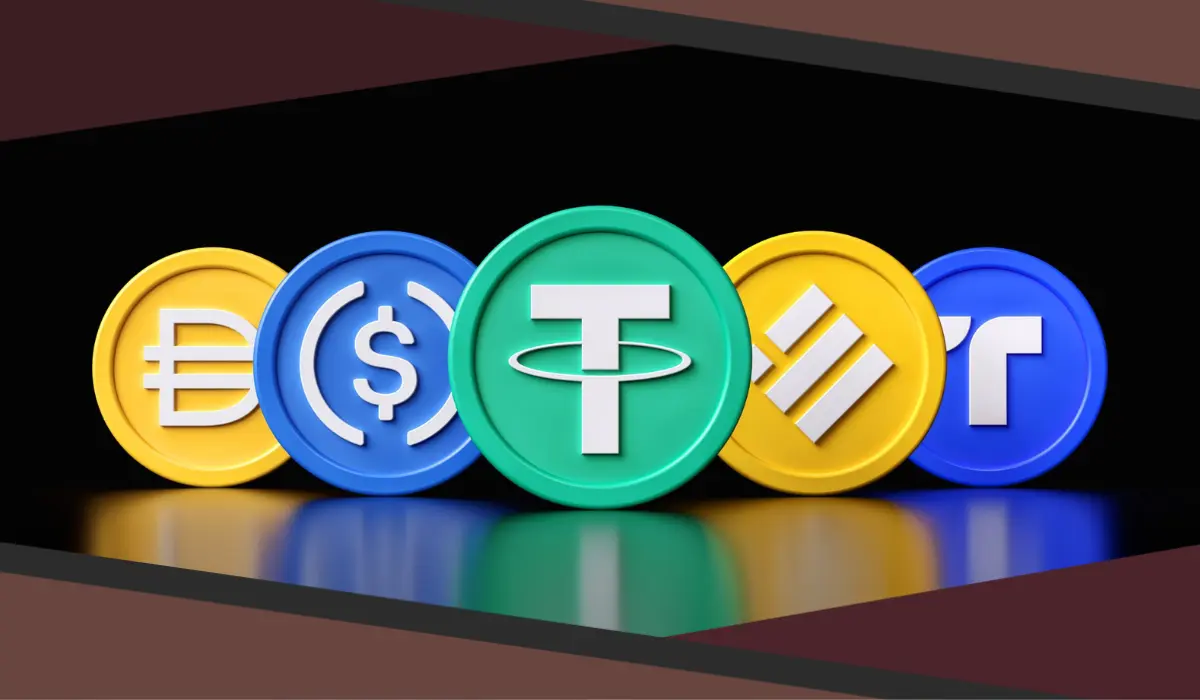
The stablecoin sector, long regarded as the bedrock of the cryptocurrency ecosystem, faces a defining moment in mid-2026. After years of meteoric growth and aggressive expansion, the market is navigating a complex landscape defined by regulatory scrutiny, shifting institutional preferences, and cooling retail interest. With the global stablecoin market capitalization hovering around $313 billion a figure that has shown signs of plateauing compared to the rapid surges of 2025 analysts and investors are now asking whether the era of unchecked growth has truly concluded.
A Period of Structural Maturation
The narrative surrounding stablecoins has shifted from “rapid expansion” to “structural maturation.” While total market capitalization remains near all-time highs at approximately $313 billion, the velocity of growth has significantly tapered. Data from the first half of 2026 reveals a notable departure from the exponential supply increases that characterized previous years.
This shift does not necessarily signal a collapse, but rather a transition into a more disciplined phase. The “wild growth” era marked by high-leverage experimental models has largely been replaced by a focus on institutional-grade stability and regulatory compliance. As the market pivots toward these more traditional financial standards, the “boom” phase defined by speculative retail mania is giving way to a more pragmatic, utility-driven utility model.
The Institutional Pivot: USDC vs. USDT
One of the most significant indicators of this maturation is the changing guard among the market leaders. While Tether (USDT) maintains its dominance in total supply, holding roughly 59% of the market, its role is increasingly bifurcated between off-chain trading and specific regional usage. Conversely, USD Coin (USDC) has emerged as the preferred instrument for institutional and “organic” on-chain activity.
In June 2026, Visa reported that USDC processed $1.21 trillion in adjusted stablecoin trading volume, more than double that of USDT’s $573 billion. This data highlights a crucial divide:
- USDT remains the primary liquidity pool for centralized exchange trading.
- USDC dominates in value, settlement, and transparency, cementing its status as the “institutional choice” for real-world asset (RWA) integration.
This divergence suggests that the market is no longer a monolith. Instead, it is fragmenting into specialized sectors where different stablecoins serve distinct roles a sign that the technology is finally finding its practical product-market fit.
Regulatory Pressure as a Catalyst for Change
Regulation is arguably the most influential force shaping the 2026 landscape. With the implementation of the European Union’s Markets in Crypto-Assets (MiCA) regulation and new licensing frameworks in Hong Kong, the “Wild West” days of stablecoin issuance are effectively over.
The U.S. Office of the Comptroller of the Currency (OCC) has further intensified this pressure with proposals targeting yield-bearing stablecoin models. By scrutinizing how issuers generate returns for holders, regulators are forcing a transition toward cleaner, reserve-backed models. For projects that previously relied on complex, high-risk yield mechanisms, the compliance burden has become an existential challenge. Companies that successfully navigate this regulatory thicket are positioning themselves as the new “blue chips” of the crypto economy, while those unable to adapt are witnessing their market share erode.
The Retail Retreat and the Rise of Automation
A striking trend in 2026 is the decline in retail-sized transactions. Records from Q1 2026 show a 16% drop in retail-sized transfers (those below $250), the largest decline in history. This contraction suggests that the average retail participant, who previously fueled much of the “crypto boom,” is either pivoting away from the sector or moving capital into other asset classes.
In the absence of high retail participation, “bot-driven” activity has surged to occupy the void. Roughly 76% of all stablecoin transaction volume in early 2026 was attributed to automated processes such as arbitrage and algorithmic market making on major chains like Ethereum and Tron. While this provides high trading volume, it underscores a fundamental shift: the sector is increasingly becoming an engine for institutional financial plumbing rather than a retail-driven currency for daily consumer payments.
Looking Beyond the Cap: Tokenized Real-World Assets
Despite the talk of a “boom ending,” the foundational utility of stablecoins is growing in areas that do not immediately reflect in headline market cap numbers. The rise of tokenized U.S. Treasuries with approximately $12–15 billion now held on-chain demonstrates that stablecoins are effectively becoming the “rail” for the next generation of financial settlement.
Major entities like BlackRock and Circle are deepening their footprint in this space, turning what began as a niche crypto experiment into a vital component of global finance. As stablecoins evolve into payment infrastructure, they are increasingly competing with legacy systems like the US ACH network, occasionally surpassing them in settlement speed and efficiency.
Conclusion: A New Cycle Begins
Is the stablecoin boom over? If the question refers to the speculative, high-growth, retail-dominated phase of 2022–2025, the answer is likely yes. However, this end marks the beginning of a more stable, regulated, and institutionally integrated chapter.
The current market cap stagnation should be interpreted not as a failure, but as a “reset” to a more sustainable growth trajectory. As stablecoins integrate into the traditional financial system, their value will increasingly be measured by their ability to facilitate real-world economic activity, cross-border payments, and secure institutional settlements. The “boom” may be cooling, but the “utility” is just warming up.
