
Hidden Costs of Liquidity Provision in Markets
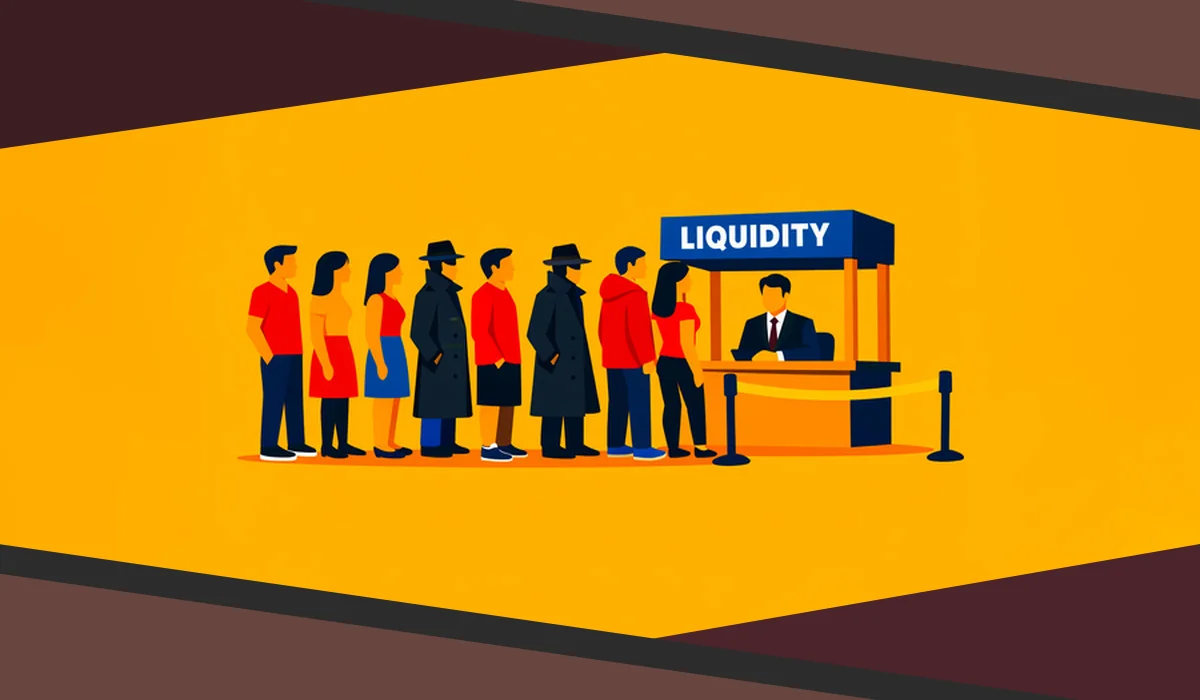
In modern financial markets, especially within the realm of cryptocurrency, the role of liquidity providers, such as market makers, serves as the backbone of efficient trading. They facilitate smooth transactions by constantly quoting prices for buying and selling assets, thus ensuring market depth and minimising volatility. However, beneath this seemingly straightforward mechanism lies a significant, often overlooked challenge: toxic flow. This covert dynamic introduces substantial hidden costs that can undermine the stability of markets and erode the profits of liquidity providers, making it a critical issue to understand for traders, investors, and platform architects alike.
What Is Toxic Flow?
Toxic flow does not necessarily carry ethical judgments; rather, it describes a specific form of trading activity driven by information asymmetry and strategic exploitation. It occurs when a subset of traders—often those with private or advanced knowledge—capitalize on their informational advantage by executing trades before the rest of the market can adjust. This results in a transfer of value from less-informed liquidity providers to more-informed traders, often at their expense.
Imagine a scenario where a high-frequency trader detects a price move on one exchange milliseconds before a market maker updates its quotes elsewhere. The trader then acts on this stale information, executing a trade that results in an immediate loss for the market maker. this is a typical example of toxic flow. Repeated such trades accumulate, systematically draining value from liquidity providers and costing the market its robustness.
Core Mechanics of Toxic Flow
Information Asymmetry and Adverse Selection
The primary cause of toxic flow stems from information asymmetry: when one side of the trade knows more than the other. Market makers, who are usually expected to trade without private insights, are vulnerable to adverse selection. This situation resembles the classic economic problem highlighted by George Akerlof’s “market for lemons” — where sellers with better information drive out the less-informed, resulting in a distorted market dynamic.
- Informed Traders: Those with private insights, such as traders monitoring multiple exchanges, OTC desks, or large liquidation events, capitalize on their knowledge to trade before prices reflect new information.
- Liquidity Providers: Market makers and automated liquidity pools, which provide continuous quotes, are often forced to transact at unfavorable prices, losing money on informed trades.
The Gaming of Speed and Coverage
Two major factors intensify toxic flow:
- Speed: Traders with advanced technology or closer proximity to data sources detect price movements faster and execute trades ahead of slower venues or market makers.
- Coverage: Traders who observe multiple platforms, large OTC transactions, or aggregated order book data exploit their broader market view to identify and act on mispricings.
For example, a trader spotting a price discrepancy between a decentralized exchange (DEX) and a centralized exchange (CEX) can profit from arbitrage before market makers react to correct the difference, thus capturing value that would otherwise be accrued naturally through markets.
How Toxic Flow Undermines Market Stability
Cost Implications for Market Makers
When faced with toxic order flows, market makers typically respond by either widening their spreads or withdrawing liquidity altogether:
- Widened Spreads: To compensate for higher risks, market makers increase the gap between bid and ask prices. While this protects their margins, it makes trading more expensive for all participants, leading to reduced market efficiency.
- Liquidity Withdrawal: When the risk becomes too high, market makers may simply cease quoting altogether, causing markets to become thin and more volatile.
A common manifestation of toxic flow is a stale quote, where a trader exploits outdated pricing data to execute profitable trades. Over thousands of such instances, market inefficiencies grow, and liquidity diminishes.
Impact on Market Quality and Trader Costs
Essentially, toxic flow introduces a hidden tax on all traders who rely on liquidity providers for price discovery. Wider spreads, increased slippage, and sudden liquidity droughts culminate in poorer trade execution, increased trading costs, and heightened market fragility. For retail traders and institutions, these hidden costs can significantly impair profitability and market confidence.
Crypto-Specific Challenges Amplifying Toxic Flow
The decentralised nature of many crypto markets exacerbates the problem. Unlike traditional markets where designated market makers are obligated to provide continuous two-sided quotes, many crypto liquidity providers operate on a voluntary basis, offering quotes when profitable and withdrawing when not. This volatility in participation creates bursts of thin liquidity, inviting exploitation through toxic flow.
Adding complexity, crypto markets are often fragmented across multiple exchanges operating at different speeds, with CEXs generally updating prices faster than DEXs. This asynchronous operation creates windows where informed traders can execute arbitrage or exploit stale prices, further reinforcing toxic flow dynamics.
On-Chain and DeFi Mechanics
Automated Market Makers (AMMs), such as Uniswap, rely on deterministic formulas that do not recognize informed trading. When market prices shift rapidly, AMMs can experience losses, a phenomenon called loss-versus-rebalancing (LVR). Liquidity providers bear the cost, often without realizing it, as arbitrageurs rebalance pools by trading against stale prices, systematically transferring value away from liquidity providers toward better-informed traders.
Structural Factors and Organized Exploitation
In the crypto ecosystem, toxic flow has evolved into organized activities, led by specialized actors called searchers. These participants monitor mempools, cross-reference multiple exchanges, and coordinate with block builders to maximize arbitrage gains. This vertical integration concentrates power among a small cadre of arbitrage entities, making the exploitation more systematic and harder to counteract.
Strategies and Responses to Combat Toxic Flow
While eliminating toxic flow entirely is unrealistic, markets have devised several strategies to mitigate its impact:
- Dynamic Fee Structures: Implementing higher fees during periods of suspected informed trading to compensate liquidity providers for increased risk.
- Delayed Settlements and External References: Using offchain prices or transaction batching reduces the advantage of speed and stale pricing.
- Batch Auctions: Executing multiple trades at a single clearing price minimizes the benefit of tiny speed differences.
- Private and Intent-Based Orders: Using privacy-preserving architectures and private channels to shield order flow from informed traders.
Conclusion: Managing the Hidden Cost of Liquidity
Ultimately, toxic flow represents an inherent challenge in any market relying on continuous liquidity provision. It underscores a fundamental truth: liquidity is often funded by market participants who unwittingly subsidize the informed traders’ gains. As Zhu emphasizes, liquidity providers are effectively “funding the market,” with toxic flow shifting this cost onto less-informed traders and providers. Recognizing and managing this hidden cost is essential for designing resilient markets, whether traditional or decentralized, ensuring that liquidity remains a sustainable and equitable resource rather than a conduit for systemic exploitation.
Frequently Asked Questions
What is the main cause of toxic flow?
Toxic flow primarily arises from information asymmetry, where informed traders exploit private or superior information to trade ahead of the market, costing liquidity providers and less-informed traders.
How does toxic flow affect retail traders?
It increases trading costs through wider spreads and slippage, reduces market liquidity, and can cause unpredictable price movements, making trading less efficient and more risky.
Can decentralized finance (DeFi) mitigate toxic flow?
DeFi platforms using AMMs are more vulnerable because they rely on deterministic pricing formulas that cannot recognize informed trading. While some solutions like batch auctions help, fully mitigating toxic flow remains a challenge.
Is widening spreads an effective response?
Widening spreads helps market makers preserve margins but also raises costs for all traders, potentially reducing overall market liquidity and efficiency.
What is the future outlook for toxic flow in crypto markets?
As markets evolve, efforts like privacy enhancements, improved architectures, and novel regulation might reduce toxicity but are unlikely to eliminate it entirely. Managing this asymmetry remains an ongoing challenge for market design.
