
1.4 Million Cryptocurrency Tokens Failed
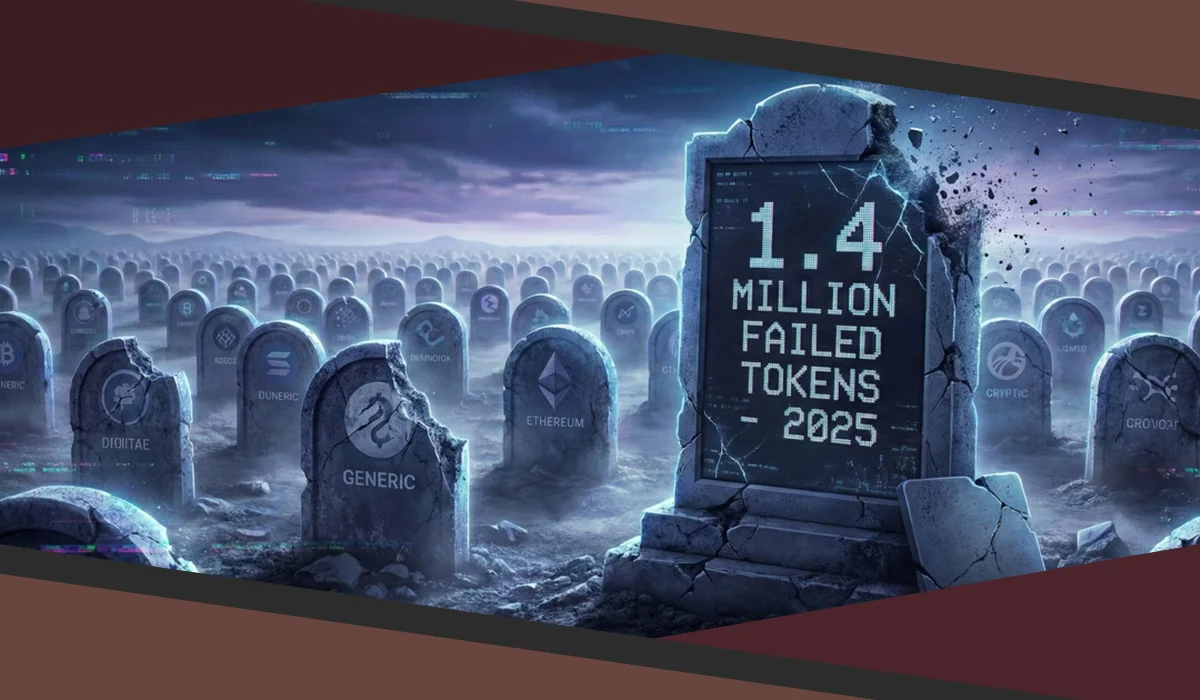
In the rapidly evolving landscape of cryptocurrency and blockchain technology, 2025 stands out as a year marked by unprecedented levels of token failure. According to recent analyses, approximately 1.4 million tokens, roughly 40% of all tokens launched in that year – became inactive or “died.” This phenomenon has sparked discussions about the so-called “Great Filter” in the crypto ecosystem, raising questions about sustainability, market dynamics, and the underlying risks of mass experimentation in digital assets.
Context: The Crypto Token Boom and Bust in 2025
The surge of new tokens in 2025 was driven by low barriers to entry. Developing and launching a cryptocurrency or token became increasingly inexpensive and swift, leading to a proliferation of projects, many of which lacked substantial use cases or network support. This environment fostered a culture of rapid creation and equally rapid abandonment, emphasizing experimentation over stability.
CoinGecko’s data indicates that over 3 million tokens have been created since 2021, with more than a third failing within a single year – 2025. This mass failure rate underscores a critical shift from growth to attrition, where the majority of tokens are not supported by real utility or community backing and are abandoned when liquidity or investor interest wanes.
The Significance of Mass Failure: The Great Filter Concept
What Is the Great Filter?
The term “Great Filter” originates from discussions about the survivability and longevity of civilizations or technologies over time. Within the crypto sphere, it refers to the natural and systemic barriers that prevent a majority of projects from achieving long-term sustainability. The 2025 token failures exemplify this filter, most projects simply do not survive the initial phase of launch and liquidity challenges.
Implications for Market Dynamics
- Risk Appetite Shift: Investors became increasingly cautious, recognizing that most tokens are disposable. This has led to a more risk-averse environment, where only projects with strong fundamentals or real-world utility attract significant funding.
- Market Saturation and Contradictions: The vast number of failed tokens creates a cluttered market, making it harder for successful projects to stand out. Moreover, the proliferation of tokens has diluted overall investor confidence and increased skepticism about new launches.
- Experimentation versus Sustainability: The low-cost, high-speed token creation model facilitated innovation but also encouraged “throwaway” projects, accelerating the churn rate and highlighting the importance of quality over quantity.
Factors Contributing to the 2025 Token Failures
Low Barriers to Entry
Creating a new token became easier than ever, with minimal technical knowledge required and no strict regulatory oversight initially. This democratization of token creation led to an explosion of projects, many of which lacked actual utility, clear use cases, or viable business models.
Liquidity and Market Support
Most tokens failed due to liquidity issues. Without liquidity, tokens become illiquid and effectively worthless, as they cannot be easily traded or exchanged. This scenario is typical when speculative pumps fade, and investors withdraw their support.
Market Volatility and Correction
2025 experienced heightened volatility, with sharp corrections and forced deleveraging episodes. Such environments tend to accelerate the collapse of microcap projects and tokens that rely heavily on speculative trading rather than intrinsic value.
Future Outlook and Lessons Learned
The catastrophic failure rate in 2025 serves as a stark reminder of the importance of due diligence, sustainability, and real utility in blockchain projects. While the ecosystem continues to innovate, a more cautious approach may dominate future launches, with emphasis shifting towards quality, community backing, and technological robustness.
Regulatory developments are also likely to play a role in curbing speculative excesses, creating more accountability, and reducing the prevalence of disposable tokens. This process could act as a natural filter—protecting the market from low-quality projects and fostering a healthier, more sustainable environment for blockchain innovation.
Frequently Asked Questions
Why did such a large number of tokens fail in 2025?
The primary reasons include low barriers to creation, lack of genuine utility, liquidity problems, and a highly volatile market environment. Most projects were created for speculative purposes and lacked long-term viability.
What is the impact of these failures on the overall crypto market?
These failures contribute to increased market skepticism, influence investor risk appetite, and highlight the importance of due diligence. They also serve as a natural selection mechanism—filtering out unsustainable projects and encouraging higher standards.
Will 2025 be an anomaly or a turning point?
While the failure rate in 2025 was extraordinary, it may mark a turning point towards a more mature market where project sustainability and utility are prioritized over sheer volume of launches. Regulations and market intelligence are likely to shape future project launches.
Conclusion
The death of approximately 1.4 million tokens in 2025 illustrates a critical phase in the evolution of blockchain technology, a period of intense experimentation inevitably followed by natural attrition. This phenomenon underscores the importance of quality and sustainability over sheer quantity in the development of digital assets. Recognizing these systemic filters can guide investors, developers, and regulators toward a more resilient and mature crypto ecosystem, where enduring projects can emerge from the chaos.
